Dutch food does not have the strongest international reputation. Simple? Yes. Plain? Sometimes. Boring? Not as often as you might think! Dutch cuisine has many tasty and interesting dishes for you to try, which for sure won’t disappoint. In this blog we’ll take you through some of the most iconic Dutch traditional foods.
What is traditional Dutch food?
Traditional Dutch food did not develop around luxury or strong flavours. Instead, Dutch meals focus on nutrition and practicality. After long, hard-working days on the farms, people wanted something simple and easy, that would keep them full through the night. One of the crops most often used was potatoes.
Potatoes grow very well in the Netherlands. The flat landscape, fertile soil, and cool, wet climate made crops like potatoes, cabbage, onions, and carrots reliable and affordable food sources. For many families, these ingredients formed, and still form, the basis of daily meals.
Dutch meals traditionally don’t contain many spices. This is because of two main reasons. The first reason is that spices were considered a luxury. Although imported in large quantities by the Dutch East India Company, spices were reserved for the rich, and were difficult to afford for farmers and craftsmen alike.
The second reason is the influence of Protestantism, especially Calvinism. These movements focused on values like modesty, discipline and avoiding luxury. These values extended to food. Luxurious meals and rich seasoning were often seen as unnecessary or even inappropriate. Simplicity became a virtue, and “normal” was considered good enough.
Now that you know why Dutch dishes are the way they are, let’s take a look at them!
Traditional Dutch dishes you should try
- AVG
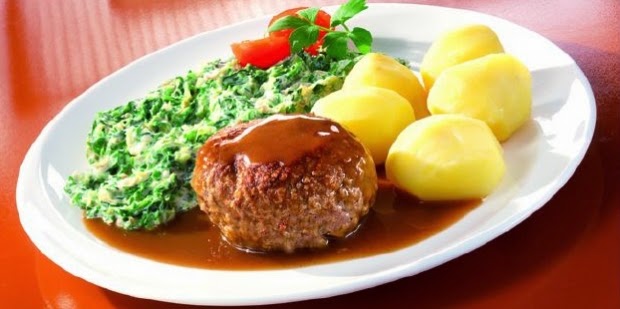
- The most traditional Dutch dish of them all, AVG. AVG is short for “Aardappel, Vlees, Groente”, which translates to Potatoes, Meat and Vegetables. It is the most simple, but definitely the most cooked meal among Dutch families. Often served with “jus”, the Dutch word for gravy. If you ever get invited by a Dutch grandma to have dinner at her home, chances are she’ll serve you an AVG, the same one she has been eating all her life.
- Kibbeling
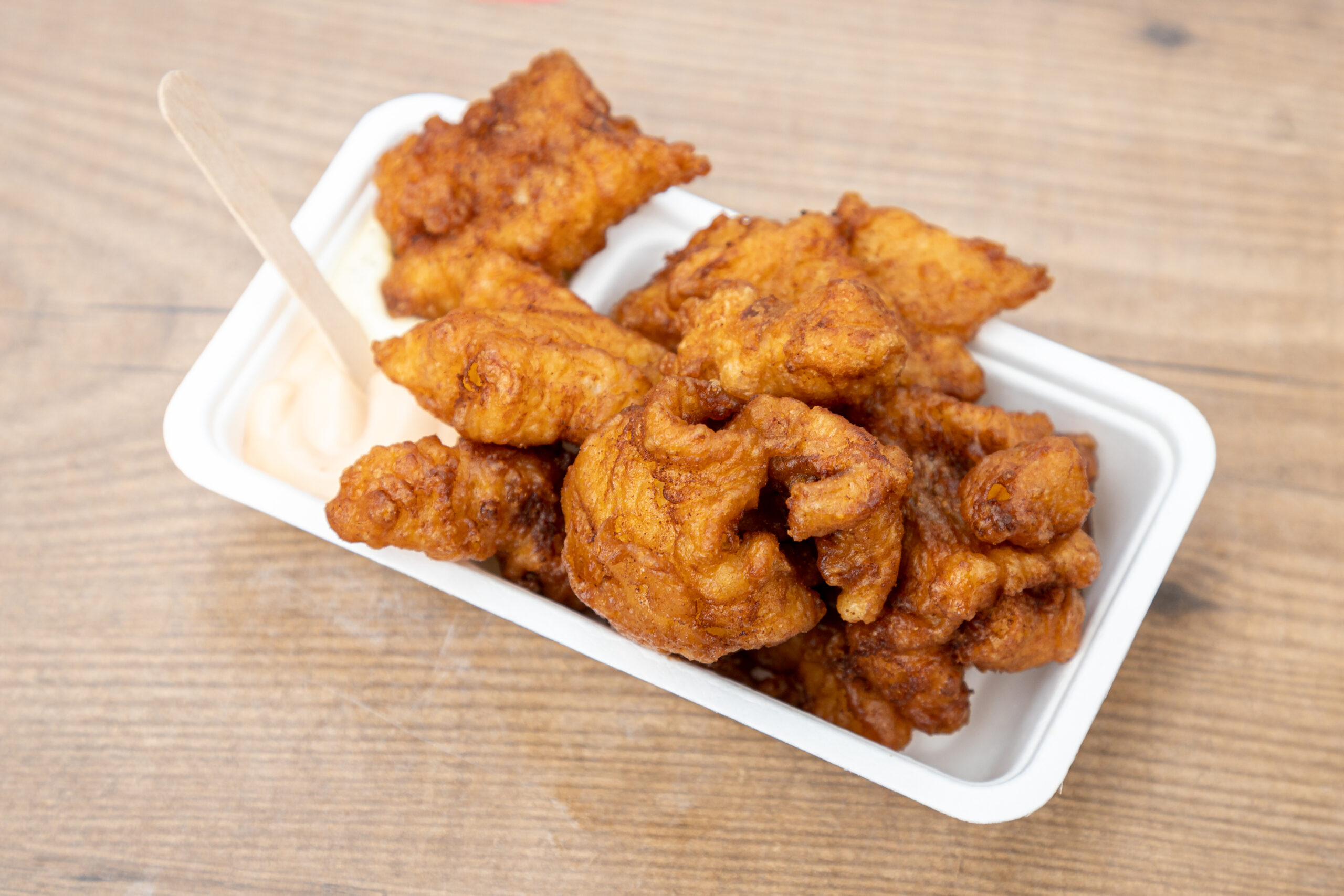
- Kibbeling is the national fish fast food of the Netherlands. It is fried white fish, often cod, often served with ravigottesaus. Ravigottesaus doesn’t even sound appealing to a native speaker, let alone an expat, but it sure is delicious, and cannot be missed when eating Kibbeling!
- Bitterballen
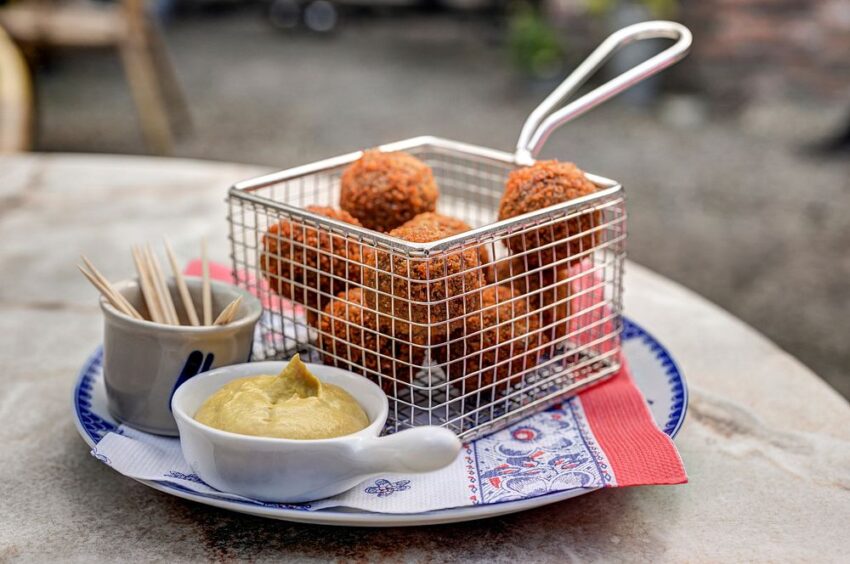
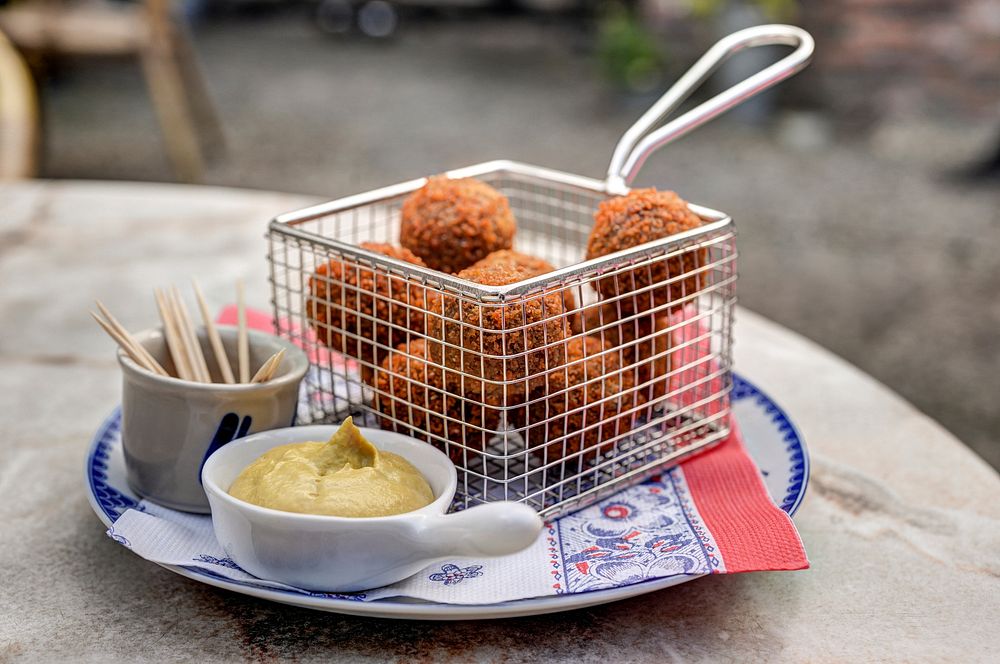
- Bitterballen are the social snack of the Dutchies. You can order them in almost any cafe you can find. They consist of a beef ragout, surrounded with fried breadcrumbs, and are often served with mustard. They are also always a part of the famous “Borrelmix”, which consists of many fried Dutch snacks, including bitterballen.
- Haring
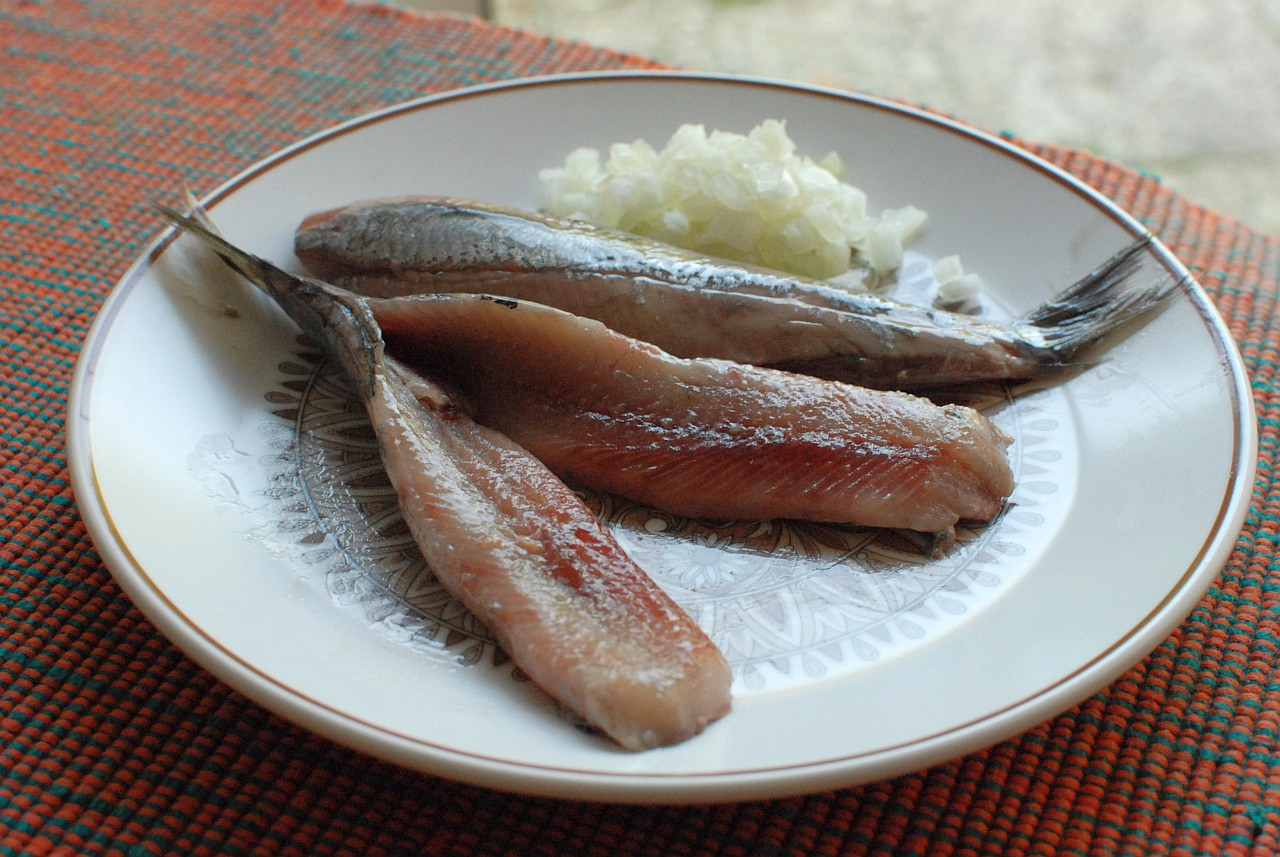
- Haring, or raw herring, is one of the most well-known Dutch foods. For many visitors, it is their first real cultural food challenge in the Netherlands. What makes haring especially famous is how it is eaten. People hold the fish by its tail, tilt their head back, and take bites from top to bottom. Although this is the traditional way, Dutch people don’t really do it that much, and it is more often done by tourists.
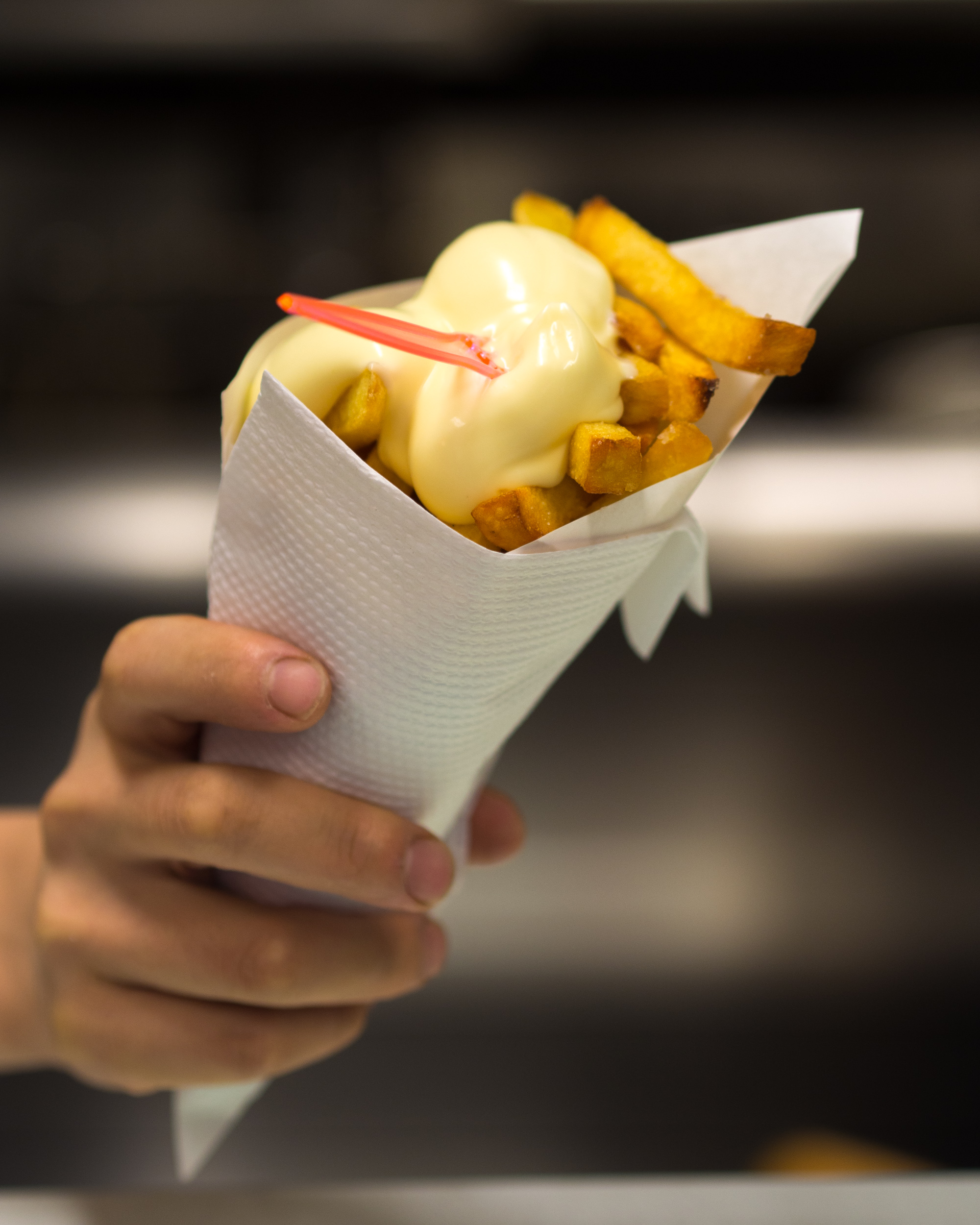
- Patat
- Patat is simply fries. Salted and fried potato, often served with mayonnaise. In the Netherlands, the most popular version is “Patatje oorlog”, which literally means “War Fries”. These are fries served with mayonnaise and peanut sauce (satésaus), topped with raw white onions. Also, there is a huge debate between the North and the South of the Netherlands concerning the name of fries. The north calls it “patat”, while the south calls it “friet”. The south especially takes this very seriously, so be careful who you say ‘patat’ to!
- Frikandel
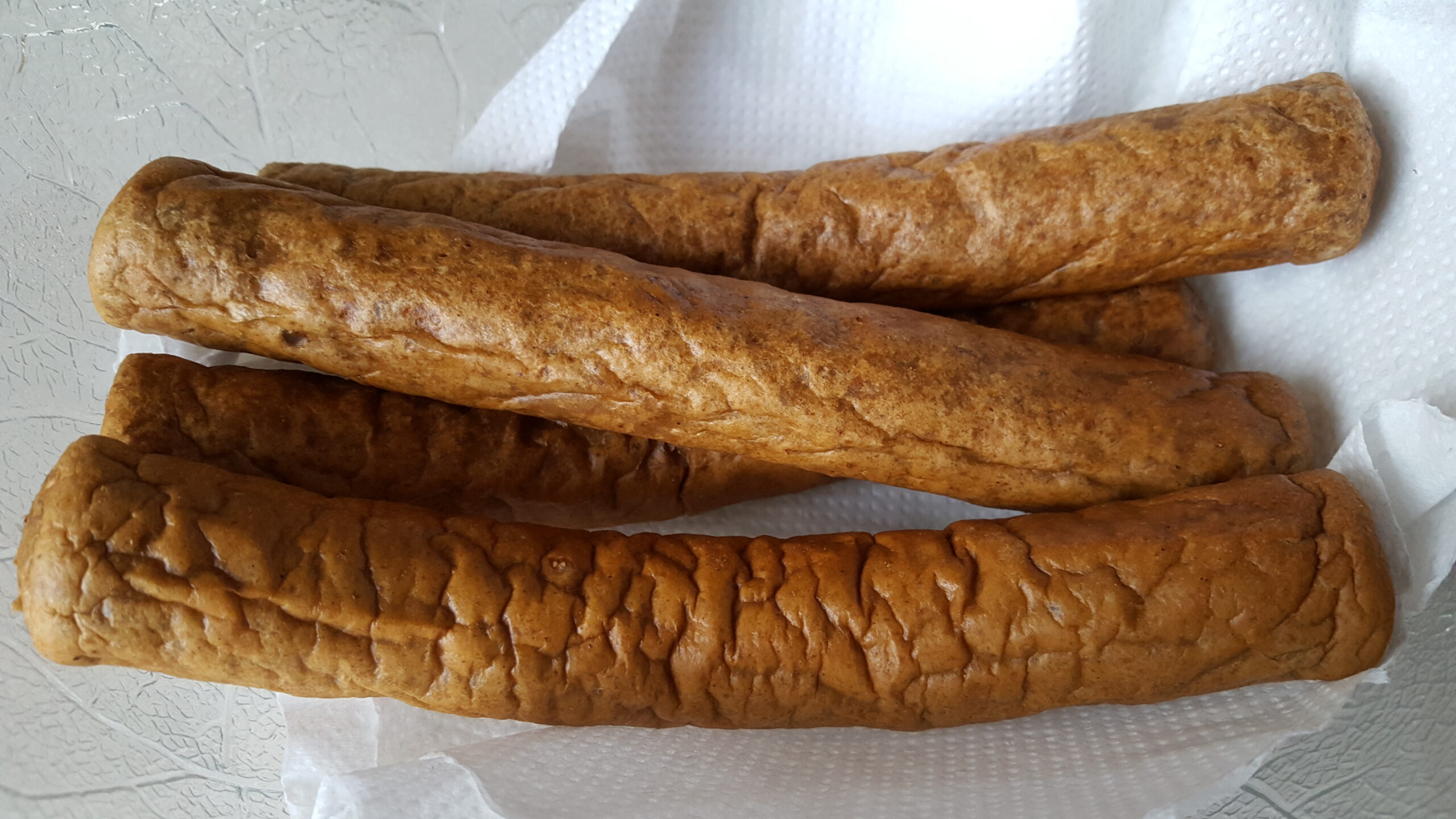
- Frikandel is the most popular side dish when ordering “patat”. It is a kind of sausage, consisting of different kinds of meat, mixed with certain spices. It is definitely not a traditional sausage. Not only because of the unique taste, but also because of the fact that it is often drenched in mayonnaise and ketchup, topped with, once again, raw white onions. It is also a part of the Borrelmix which you can order at every cafe.
- Stamppot
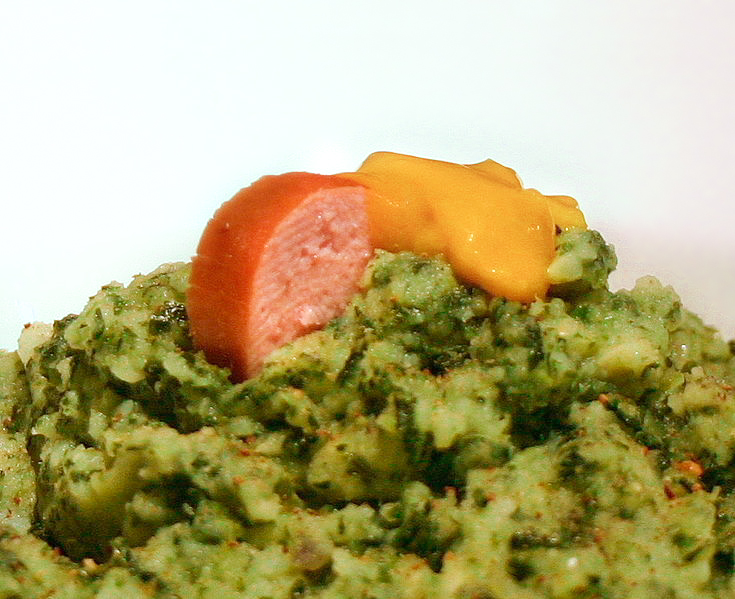
- Stamppot literally means “mashing pot”, and this is quite an accurate description. The base of this dish is always potato, with a vegetable like endive, spinach or carrot. This is then all cooked together in one pot, and mashed into a smooth mixture. It is often served with “rookworst”(meaning smoked sausage), and gravy, which is poured into a small well on top.
- Erwtensoep
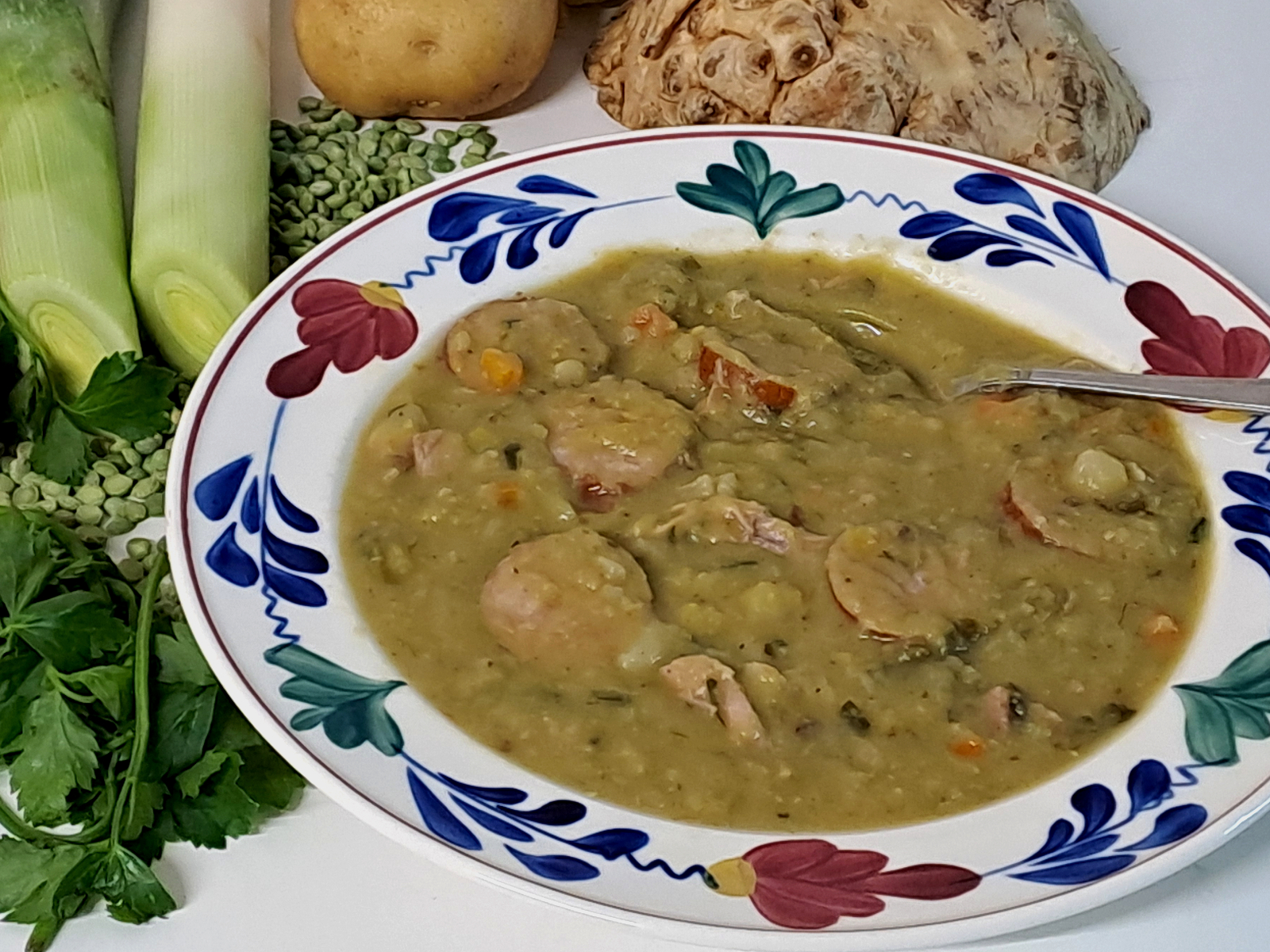
- Erwtensoep, often called snert in the Netherlands, is one of the most iconic Dutch winter dishes. However, the idea of pea soup itself did not originate in the Netherlands. Versions of pea soup have existed across Europe for a long time. The Dutch version of pea soup is quite thick and is made with rookworst, bacon, carrots, and other ingredients.
- Speculaas
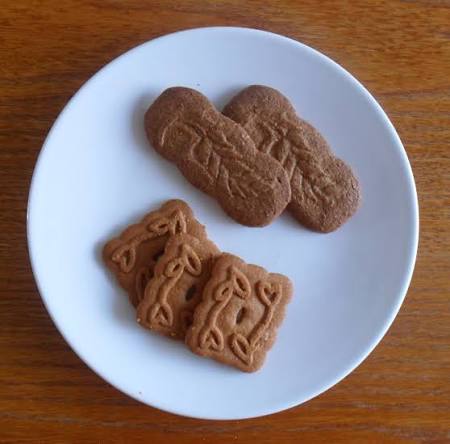
- Speculaas is probably the second most famous cookie in the Netherlands(after stroopwafels), although you might have never heard of it. Speculaas gets its flavour from a spice mix with the same name, containing spices such as cinnamon, cloves, and nutmeg. The spices were first imported by the Dutch East India company in the 17th century. Ironically, out of all those spices, only nutmeg is frequently used in the Dutch kitchen, namely in stamppot.
- Hagelslag
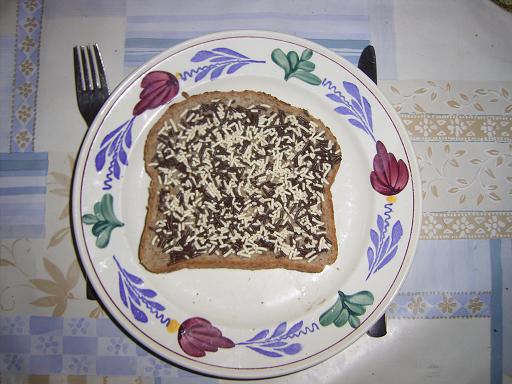
- Hagelslag is an interesting one. Hagelslag is translated tas chocolate sprinkles. In the Netherlands, both children and adults put it on their bread, with butter underneath(to make it stick to the bread). The first version of sprinkles were not made from chocolate, but with sugar or anise. Until 1936, when a kid wrote a letter to a chocolate company, with the idea of chocolate sprinkles. It has been very popular ever since.
- Oliebollen
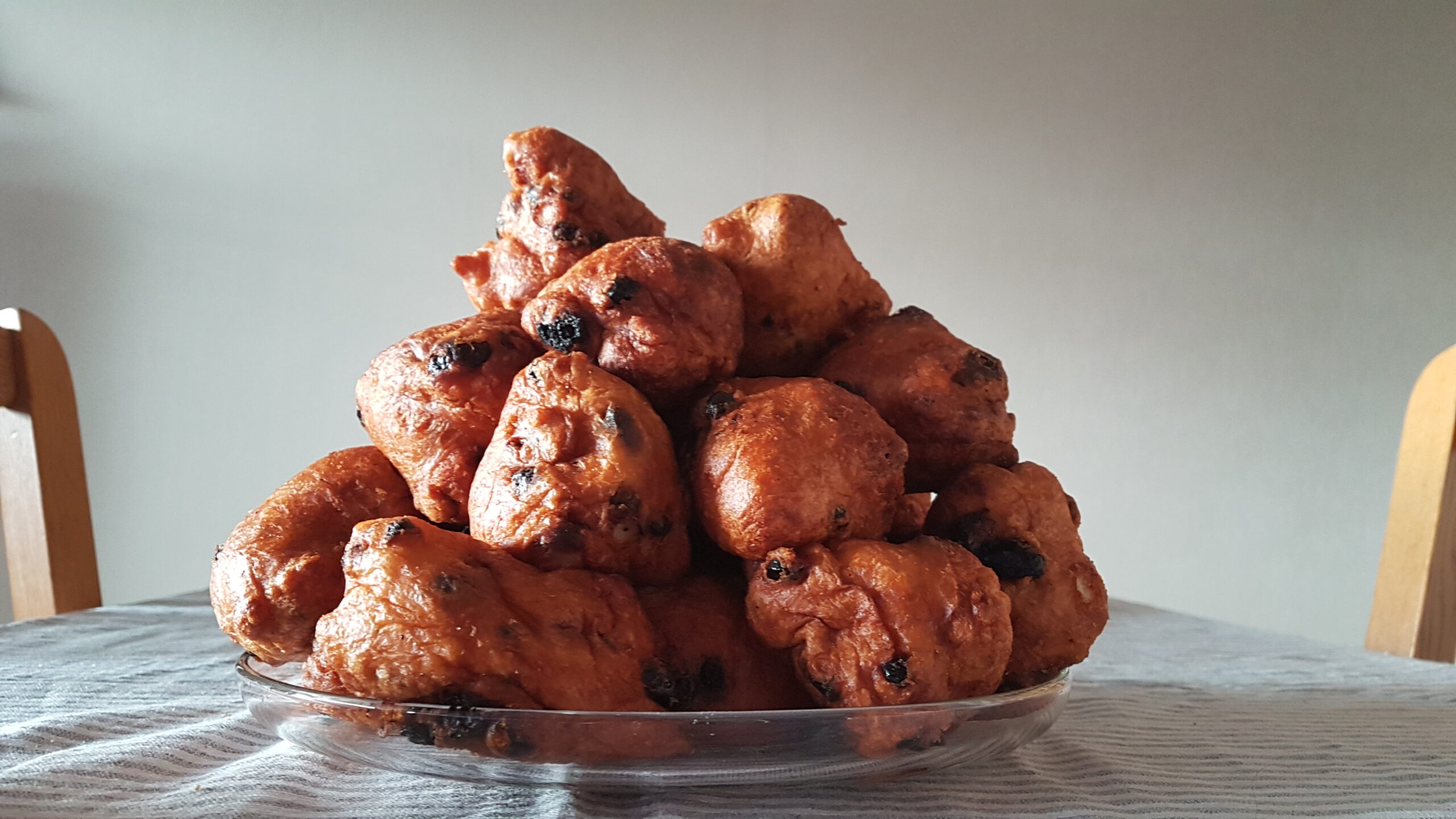
- Oliebollen translates to Oil Balls, and that is exactly what they are. Oliebollen are fist-sized dough balls, deep fried in sunflower oil and topped with powdered sugar. Oliebollen often contain raisins, but you can also get them without.
How traditional Dutch food is changing today
Dutch food today looks very different from the image many people have of it. While traditional dishes are still shaped by simplicity, practicality, and comfort, the way people eat in the Netherlands continues to evolve. Food culture is no longer just about what is filling or affordable, but more and more about flavours and health too.
In everyday life, traditional Dutch meals now exist alongside influences from all over the world. Cities and towns are home to people from many different backgrounds, and this diversity can be seen on the plate. International cuisines have become part of daily Dutch life, and in many households, a traditional Dutch meal might be followed by a dish inspired by another culture the next day. Rather than replacing traditional food, these influences have expanded it.
At the same time, progressive values play an increasingly important role in Dutch cuisine. The Netherlands has a strong culture of food awareness, with growing attention to health, sustainability, and animal welfare. This has led to a rise in vegetarian and vegan alternatives, including modern versions of traditional dishes. Classic meals are being reinterpreted, proving that even a simple food culture can adapt without losing its roots.
Dutch food is no longer as plain as it once was. While traditional dishes remain simple, new influences and changing habits have added more variety to what people eat today. Luckily for you, there is still plenty to try, both traditional and modern!